
The Wrong Breeder Will Break Your Heart… And Your Bank Account.
Nearly half of U.S. households have at least one dog, and over 2 million puppies are sold each year. Most come from commercial breeders, but like any unregulated industry, practices range from exceptional to criminal. It’s a buyer beware market, and it’s up to us to know the difference.
With a few clicks and a little (or a lot) of AI help, anyone can create an attractive, legitimate-looking website. While I love being able to order emergency underpants at 2 in the morning, purchasing a puppy shouldn’t be as simple as buying a screaming goat figurine.
There are good dog breeders out there, but they rarely show up in the first few search results. It’s worth the time to find our new best friend without funding breeders who care more about money and the latest “designer” dog fad that hides health and behavioral issues, as I covered in my previous doodle deep dive.
Prefer to listen?

Neuroqueer: At the Intersection of Neurodivergence and Queerness – Amy Says Things
The Best Breeders Aren’t Where You Think They Are
The best way to find a good breeder is to take your search offline. They don’t have time for flashy websites or active social media: they’re busy going to shows, training, participating in sports, or working their dogs in the field. Dog shows and sporting events are filled with dog nerds who can tell you who’s good and who you should avoid. Breed-specific clubs can point you to local meetups and events.
If you’re interested in a particular dog sport or activity, attend events and talk to participants and watch your potential dog in action. Seeing a Belgian Malinois crush it at a Schutzhund trial gives you a solid idea of how athletic and intense they are, and their handlers can help you decide if a malligator is a good fit for your family and lifestyle. (Spoiler: the answer is “don’t get one unless you’re nuts”)
If you’re allergic to people, disabled (or live with someone who is), or live in a rural area, breed specific websites are a good place to start. Social media groups are hit and miss. There are genuine experts in them, but they’re outnumbered by pet owners, loud opinions, and the occasional grifter. You can spot the dog nerd by their 1,000+ word essays, complete with footnotes and citations.
Why “Available Now” Puppies Are a Bad Sign
You’ve fallen in love with a breed, found good advice from fellow enthusiasts, and even have a few recommendations. Now all you have to do is visit their site, order your puppy, and start your life with your new bestie, right?
Wrong.
Now the real work begins.
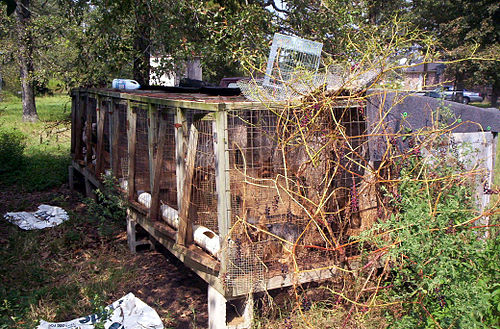
Start with the Humane World’s Horrible Hundred list. It highlights the worst puppy mills and hoarders keeping dogs in inhumane conditions while selling sick and undersocialized puppies to unsuspecting buyers. It’s a solid place to start, but plenty of unethical breeders don’t make this list.
Red And Green Flags
They’re not one of the Horrible Hundred? Great! That’s the first (and easiest) step.
Head on over to their website and be skeptical. Treat cute puppy pictures like dessert and save ‘em for last. The best breeders have informative sites worth bookmarking instead of just puppies for sale.
Look for badges from professional associations like AKC’s Bred with H.E.A.R.T, and other breed clubs, usually at the top or bottom of the page. They’re not guarantees, but there are minimum standards breeders have to uphold in order to be in good standing with them. Take note of any you find, and check out the associations to see if their standards align with your expectations.
Look for breeders who produce champions, even if you don’t plan on showing. Not every puppy is cut out for the ring, but those that aren’t make excellent pets. “Champion line” is meaningless and often a sign of overbred, undersocialized dogs. These dogs have a much higher chance of genetic diseases and behavior problems.
⚠️ Red Flags Beyond Comic Sans
- Typos, broken links, or sites built on free templates.
- Tons of puppy glamour shots with nothing on parents.
- “Clearance” sales or “rare designer colors.”
- Affiliate link spam or MLMs.
- Puppies shown on multiple websites or in stock photos (run a reverse image search!).
What To Know About Health Testing
More buyers know to ask about health testing, and I’m here for it. The gold standard comes from the Orthopedic Foundation for Animals (OFA), an organization dedicated to reducing genetic diseases in companion animals. Breeding dogs are tested for both genetic and joint diseases and are searchable in a public database. Puppies can get preliminary testing on their joints.
⚠️ Red flag: breeders who only list preliminary OFA results (or none at all).
Make sure their vet is a licensed DVM, and that a vet administers puppy vaccines. Avoid anyone who does their own vaccinations or has their vet tech/vet assistant “friend” do them. Breeders who do this put everyone at a higher risk of disease.
Buyer Beware: Facebook Puppies and Barking Vet Bills
During my research, I ran across a site that featured a happy celebrity holding one of their dogs. Sure, it’s exciting for the breeder, but a celebrity endorsement doesn’t mean jack when it comes to their health or temperament.

When someone is offering a rainbow of popular small and toy breeds, there’s a good chance you’re looking at a puppy mill. Mothers are stacked in cages in a misery parfait, and you’re going to inherit some problems.
Some bully breeders advertise their dogs like a UFC promo. Look closely: you’ll see an alarming amount of inbreeding sold as “proof” of their quality. If their family tree looks like 16th century European royalty, it’s a genetic time bomb. You’re going to shell out big bucks at the vet, and if you’re really unlucky, a behaviorist.
For the love of everything holy, do not buy puppies from Craigslist, Facebook Marketplace, or broker-style websites. These places are full of scammers plus the worst backyard breeders and puppy mills. I’ve known more than one heartbroken pet parent who lost their brand new puppy to parvo, only to be ghosted by their “breeder.” These people don’t deserve your hard-earned money.
Trust, But Verify: See Through BS to Find Reputable Breeders
It’s not enough to take a breeder at their word.
- Call up their vet and see what they say. If they’re good, the vet, or at least their front desk, will happily sing their praises.
- Go to OFA.org and look for the parent certification. (and puppy, if provided)
- Cross-check their breeder associations and make sure they’re in good standing.
Anything and everything that leads to an outside source has to be double-checked.

⚠️ If they say “trust me, bro,” assume they’re shady.
Five Stars or Felonies? Know Who You’re Dealing With
Breeder websites naturally cherry pick the best reviews. What do Google, Yelp, and social media say? Is it consistent, or are there a lot of angry people complaining about the breeder elsewhere?
Next, head over to the Better Business Bureau and check for complaints and reviews. A high rating means they respond to customer complaints, but won’t tell you if they’re ethical.
Finally, look for any civil or criminal complaints against the breeder or their business. A good breeder might get sued (it happens), but anyone with several civil cases or animal cruelty charges should never get your business.
Pre-Puppy Playdates Help You Find Breeders Who Pass The (Literal) Sniff Test
You’ve found a breeder you like who seems reputable! Woohoo! It’s time to visit them in person to see if their dogs are worth your money.
❔Ask yourself, “Would I be comfortable leaving my dog here?”
Breeder Green Flags You Should Look For
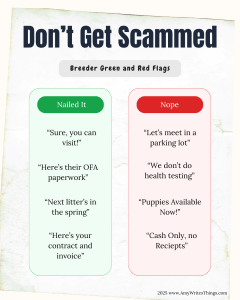
✅ These are all signs of reputable breeders:
- Happy to let you meet parents and any litters being socialized
- If dogs are kept in kennels, they are clean and well-maintained
- If dogs are kept in the home, it’s tidy with a separate whelping area
- Breeder is knowledgeable and encourages questions
- Transparent about any issues and provides documentation
- Has puppy socialization plan and can explain it to a five-year-old
- Clear about next steps, policies, and contracts
These Are Dealbreaking Breeder Red Flags
⚠️ Don’t let their bad practices become your problem.
- Won’t let you meet parents, visit facility, or wants to meet elsewhere
- Dirty, smelly, or chaotic environment
- Vague or evasive communication
- Payment only through cash, Zelle, Venmo, or gift cards
- High pressure sales tactics
- Selling puppies younger than 8 weeks old
- Unusually high or suspiciously low prices
- “Exclusive” or “rare” coat colors
- No contract, or filled with clauses like going to a specific vet, a particular diet, or using supplements that they sell (How… convenient.)
Spot the Good Ones and Stay for a While: Questions to Ask Your Breeder
Good breeders want you to ask questions. Their dogs mean a lot to them, and they want puppies going into good homes.
They’ll also want to know about you. Expect questions about your experience with dogs or the breed, vet, income, housing, current pets, and other members of your household.
💬 Here are some potential questions you might want to ask your breeder:
- Who is your vet?
- How long have you been breeding dogs?
- What’s the average lifespan of your dogs?
- Have any past litters had health or behavioral issues?
- What age do you begin breeding your dogs?
- What’s the best way to get in touch with you if I have questions?
- What happens if I run into problems or can’t keep the dog?
- Can I review the contract before I sign anything?
Skip Genetic Roulette and Avoid the Puppy Mill Trap
Wading through the toxic sludge of scams, shady breeders, and instapuppies is exhausting. Unfortunately, the burden falls to us in unregulated industries, but we can avoid them with the right tools.

The more time you spend finding the right, instead of the first, breeder will mean you bring home a healthy puppy for a lifetime of fetch, wigglebutts and wet noses.
Have you ever bought a puppy from a breeder? What was your experience? Share your story below.
Prefer podcasts over paragraphs? Catch the audio version here.
 Amy Writes Things