Fibromyalgia is an insidious disease. The constant pain and fatigue are overbearing reminders of your limitations, and learning to live with debilitating pain and fatigue is an isolating, frustrating experience. Finding a good treatment plan can take a while. Meds help, but they never seem to be enough on their own. As we learn to live with this disease and its comorbid conditions, it becomes increasingly clear that in order to have the best quality of life possible, we need a multi-pronged approach to regain some of what we’ve lost to it.
Fibromyalgia, often referred to as fibro, is a chronic disease characterized by widespread pain throughout the body along with fatigue and brain fog. It’s unknown what causes the disease, although there appear to be some genetic, environmental, immunological, factors at play, along with how one experiences other chronic conditions. Unfortunately, there is no cure for it, and treatments revolve around symptom management.
Everyone experiences their symptoms differently. Some are plagued by pain and fatigue while others are able to be a little more active and suffer more with constant, low-grade pain and fatigue. Some may be bed-bound by symptoms while most others are able to get a few things done before they crash. We see the same solutions brought up again and again, but when you’re barely able to move without wanting to cry or curse, how do you do it? How do you keep up the good habits you’re trying to build?
Tracking Symptoms
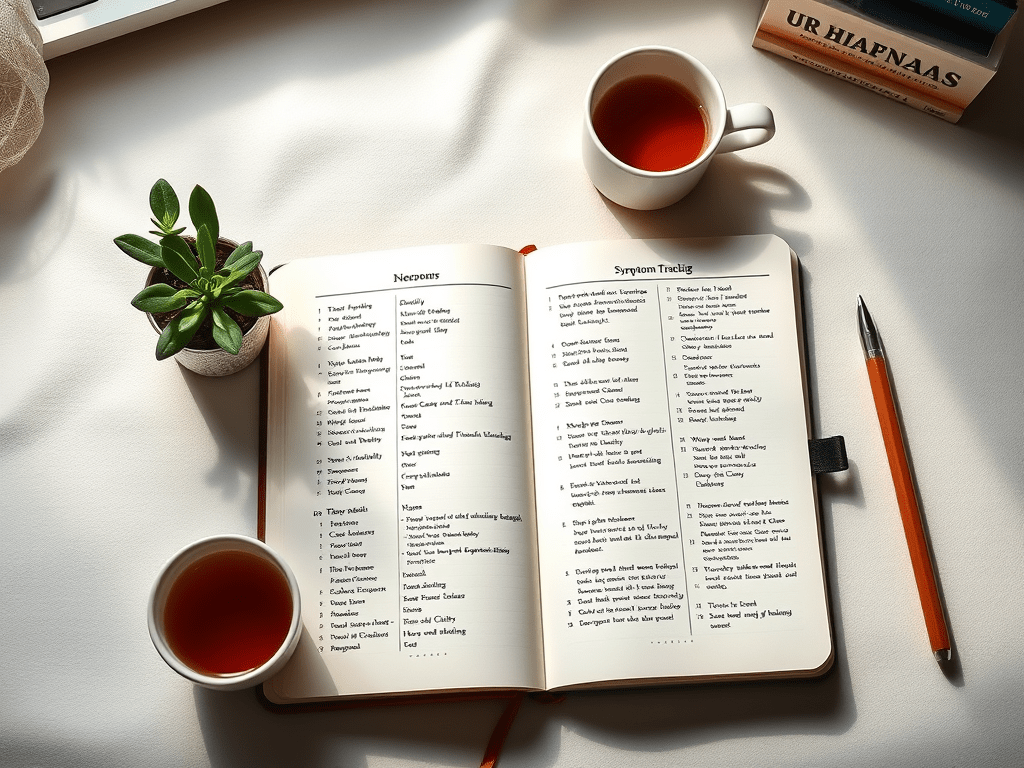
Tracking my symptoms has been one of the most influential habits to manage my fibromyalgia. As I learn how my mood, sleep, activity, and stress impact me, I can find patterns and make changes to prevent flares. I can see how long they are and what I can do to improve them. This also gives my medical team data on my day to day life instead of the snapshot they get of me when I’m in the office. This leads to better symptom management overall, which improves the number of good days I have.
If you search online for fibro trackers, you will find a myriad of examples, from apps like Manage My Pain to workbooks like physical journals like Fibromyalgia Warrior and bullet journal templates or even downloadable spreadsheets or .pdf files. Which one you use doesn’t matter, so long as it’s one you like. I’m a big fan of making my own because I can tailor it to my unique symptoms. I can zero in on what gives me the most trouble and order it in a way that flows nicely while keeping it short and sweet so that I actually fill it out.
I’ve found that more complex trackers that take several minutes to fill out are tedious and end up being half finished. The Completionist Police aren’t going to stop by and check your work, so it’s not a big deal. I feel anxious and ashamed when I look at half finished work, so I prefer to have something that I am confident I can fill out quickly on my worst days. It means I’ve got less data overall, and depending on where you are in your journey and symptom management struggles, it can be very useful to have half finished but more thorough daily notes on your symptoms.
How often should you track your symptoms?
It’s a good idea to track them daily, although if you can have large swings from the time you wake up to the time you go to bed, multiple times a day can help find patterns that make your pain worse during the day. I track symptoms with my daily journal practice, which helps to center me, give space for my worries, or to simply organize my thoughts and cement my goals for the day.
Exercise
It seems like a fever dream when you’re in the midst of a months-long flare, but the science is pretty clear: exercise improves overall pain and fatigue in those with fibromyalgia. Exercise has many benefits that can help. It boosts our mood to alleviate some symptoms of depression and anxiety, which in our case, leads to pain. As we gain muscle and flexibility, it also improves our overall pain.
But if you’ve been in the middle of a flare that has been going on for months, the thought of walking to the mailbox is miserable. A quick walk around the block sounds about as much fun as walking barefoot on broken glass (although that might be less painful given the current situation). Many of the studies bear this out as well. There is usually a high percentage of participants who have to drop out because they’re in too much pain to continue. Despite this, finding ways to move more throughout my day has helped manage my daily symptoms, even though I still get nasty flares.
Walking is my main exercise. It’s challenging to find that fine line between enough and too much, so it’s best to start off with very modest goals. Low and slow seems to work out best for us, and small wins will help motivate you as you work towards bigger goals, like an overall reduction in pain and hanging out with friends once a month. Forget the “shoulds”, be realistic with your current activity level and set your goals from there. 10,000 steps is usually seen as optimal, but once I’ve achieved that, I’m in such agony I can’t walk without assistance. My daily step goal is 5,000 steps, which is a half-mile walk twice a day with my dogs and the odds and ends of daily life and just on the border of how much I can tolerate without making my pain worse. Whatever your movement goal looks like, set it to something embarrassingly simple. Easy goals help jump start that feeling of accomplishment, making larger goals breeze by. I break down my 5,000 step goal into smaller 1,000 step chunks so that I can celebrate even the smallest win on bad days. If I can barely move but manage to get 1,000 steps, I celebrate. If I’m having a great day and manage to get in 6,000, that’s a big win! This helps to keep me motivated and feel less bad when I don’t hit my daily step count or have to work back up to it after an ugly flare.
Smartwatches make this pretty easy to track, and they’ve been a game-changer for managing symptoms and for movement accountability. If that’s not your vibe, pedometers, whether they be the simple wearable kind or an app on your phone are also useful to help track your daily movement to help you dial in your goals.
Yoga or tai chi is a great option for exercise, as they are generally low-impact and yoga’s stretching helps to loosen up tight muscles without being so intense it leaves you in too much pain to function the next day. On bad flare days, this might just be gently stretching out an achy joint or twelve or even chair yoga for five minutes.
I have also had some success preventing flares with personal trainers, although it can be hard to find a good one who understands chronic illness and the ups and downs that accompany it. Working one-on-one allows for a more tailored experience over going to classes that are designed for the average person. They can also help you dial in to specific goals, whether that is being able to get up off the floor, improving flexibility, cardiovascular health, or weight bearing exercises so that you don’t experience pain when you pick up a milk jug. A personal trainer keeps you accountable and can also help you learn how to stay active while taking it easy so that you don’t lose as much after a flare.
But most importantly, honor your pain. Move on the days you can, rest on the days you can’t. Increase activity slowly after a flare, paying attention to fatigue and pain and use that to guide you as to how much is enough for each day.
Diet
Several studies show that certain diets and weight loss for overweight individuals help overall symptoms of fibromyalgia. This is easier said than done, especially since the diets recommended include lots of whole fruits and vegetables with minimal processed food. This means they will have to be prepared by someone, and whether you’re single and living alone, have no kitchen, or the only one in the household who cooks, it’s not always possible to cook at home.
Meal delivery services that send you a week’s worth of microwavable meals can be a godsend, and most have options that cater to a specific diet, like low FODMAP, Mediterranean, Anti-Inflammatory, Plant Based/Vegetarian, Vegan and Gluten-free. There won’t be as many choices, but heat-and-eat simplicity makes eating healthier easier. The same goes for food in the frozen aisle as well. Choosing pre-made, sensible meals can be difficult, and apps like FIG or even your favorite grocery store app filtered to select foods for specific diets can help make choosing foods you’re able to prepare easier.
In the end, “fed is best” applies to us, too. Some weeks are easier than others. If it means you’re eating whatever’s handy or getting drive-thru, taking care of ourselves is the most important thing. Remember to go back to the diet that works for you once you’re past the worst of it. After a couple of decades of dealing with fibro, I’m familiar enough with my unique symptoms that I can gauge whether or not it’s a good week for cooking, or if I’m going to be a frozen food diva, or even let someone else cook for me. Honoring our bodies by paying attention to our pain and fatigue and adjusting what we can or can’t do is the best way to prevent long flares.
Sleep
One of the insidious parts of fibro is how it affects sleep. Trying to find a comfortable position when everything hurts is nearly impossible and constantly tossing and turning keeps you from getting deep, restful sleep. This leads to more fatigue, brain fog, and then there’s the inevitable pain! It’s a vicious cycle. Unfortunately, like most chronic illnesses, finding the right solution can take some time.
My smartwatch comes in handy here because of its built-in sleep tracker. It’s not 100% accurate, but I can see what my general patterns look like (lots of light sleep and very little deep sleep) and see what can be done to help that. Meds help, but I don’t relish the thought of relying on them long-term. I use them as temporary help when needed.
To help combat my squirrel brain keeping me up all night (thanks, ADHD), I like to use sleep masks to keep my environment pitch black. I’ve found that adjustable ones with velcro in the back are best in terms of being able to adjust to whatever my face will tolerate at the time while still being snug enough to block out most, if not all, light. My favorite sleep mask used to have headphones in them, and I find the large velcro and wide mask keep out most of the light and last for years.
I listen to sleep stories and books read by narrators with a calm, soothing voice with minimal voice acting. These help me fall asleep quickly. I use sleep earbuds so that others aren’t disturbed by my sleep habits, but they are, admittedly, uncomfortable come morning. Smart speakers are wonderful for this, if it doesn’t disturb anyone else. Others like to listen to music, or play a favorite movie in order to fall asleep and stay asleep longer. Some prefer to sleep alone, and it’s a great way to make sure your sleep is uninterrupted by anyone but you. Maybe you need the white noise from a fan or white noise machine to drown out small noises in your environment, or earplugs that diminish all sounds are a better choice for you. Make small changes and see what sticks.
Other sleep hygiene habits like going to bed at around the same time, and avoiding caffeine after a certain time can also help you get better sleep. It’s worthwhile to try different things to see what you like and don’t, in order to get the best sleep you can. It’ll never be perfect, but better sleep leads to less pain and fatigue.
Meditation
I know, it’s a suggestion that makes my right eye twitch. If the answer was as simple as meditation, we’d all be doing it. It’s hard to do and while it may provide some temporary pain relief, it doesn’t last long. I can’t spend my entire day sitting in the lotus position huffing patchouli incense while intoning “om” or some such nonsense. I’ve got bills to pay. But I do meditate, especially when I’m in the middle of a flare.
Mindfulness meditation is a technique where you simply notice your internal and external environment without putting any labels on what you’re experiencing. This helps with chronic pain because it manages the distress that comes along with it. This, in one way or another, is a daily practice of mine to help accept what I cannot change: I have fibro. I notice my overall pain and move on… most of the time. It improved the overall quality of my life because I learned how to stop focusing on my pain and get on with what I needed to. It’s been an important, but difficult life lesson.
Meditating during a flare is a herculean task, and frankly, I’d rather battle a lion. But when I’m overwhelmed with pain, this is still one of my go-tos to help release the anxiety I feel when I’m at my wits end. I like to do this lying down as it’s the most comfortable, and I usually practice before bed so that I can drift off to sleep at any point. There are tons of guided meditations online for free, and I usually hop on Youtube to choose one made for sleep, since its focus is on relaxation instead of noticing what hurts. You don’t have to follow all of it if there is a section you don’t like or can’t do. I don’t like body scan meditations since the pain moves to whatever body part I’m noticing, so I stick to simply observing. No one will know, I promise!
Coming to terms with having an incurable chronic condition and learning how to manage symptoms isn’t easy. It took years before I was able to find techniques that helped me have a better life. It’s not what I imagined, and it’s overwhelming and incredibly sad to think of everything I’ve lost, but it’s mine. We can make the best of what we’ve been handed one day at a time.

 Amy Writes Things